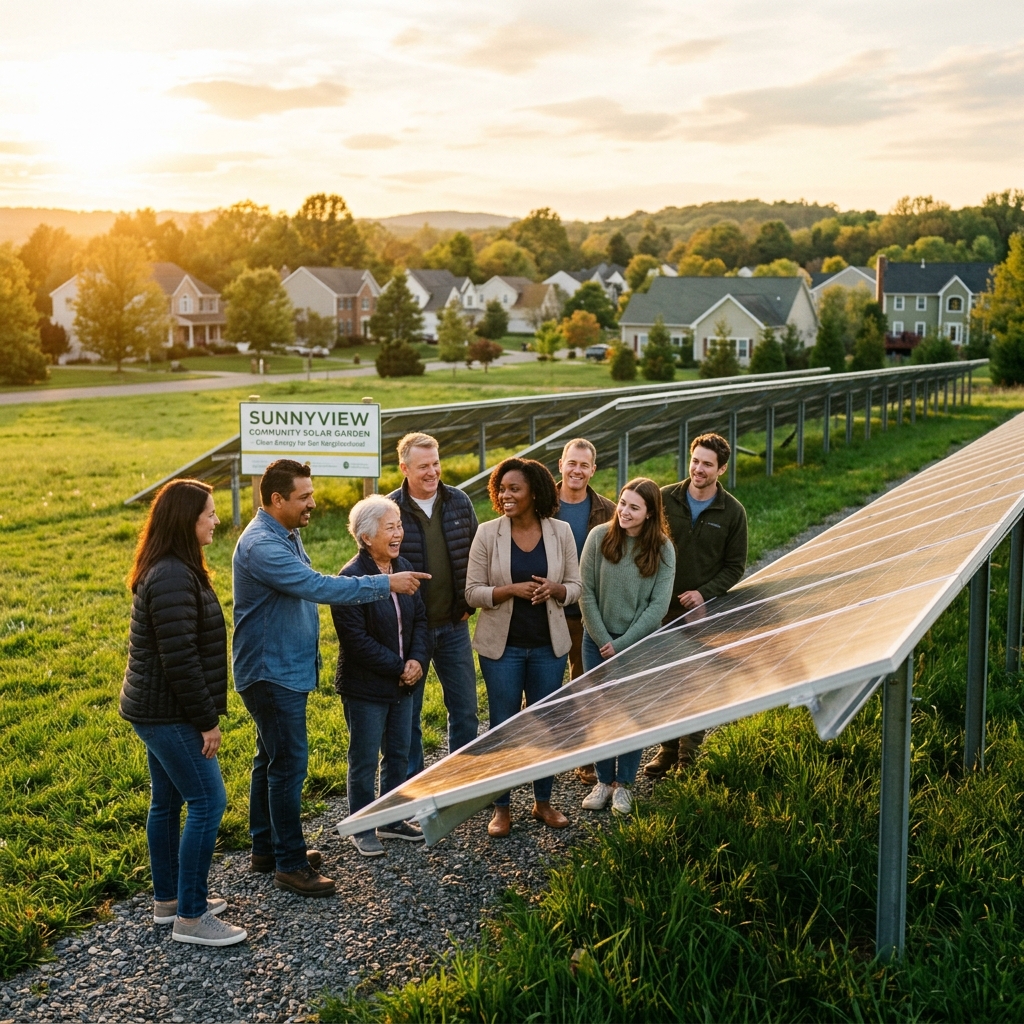
Solar Energy Without a Rooftop
For the nearly 45 million American households that rent their homes, rooftop solar has traditionally been out of reach. Add to this the millions who live in apartments, condominiums, or homes with shaded roofs, and a significant portion of the population has been excluded from the solar revolution.
Community solar is changing that.
What Is Community Solar?
Community solar — also known as shared solar or solar gardens — is a model where a large solar array is built in a central location, and multiple participants subscribe to receive a share of the electricity it produces.
Here's how it typically works:
- A solar farm is developed in a suitable location by a developer or utility company.
- Subscribers sign up for a portion of the farm's output. This can be based on estimated electricity usage.
- Credits appear on your bill. Each month, your share of the solar farm's production is applied as a credit to your utility bill.
- You save money. Most community solar programs offer 5% to 15% savings on electricity costs with zero upfront investment.
Who Benefits from Community Solar?
Community solar is designed specifically for people who cannot or prefer not to install panels on their own property:
- Renters who don't own their rooftop
- Apartment and condo dwellers without individual roof access
- Homeowners with shaded or unsuitable roofs (flat, north-facing, or too old for installation)
- Low-income households through dedicated affordable energy programs
- Small businesses that lease their commercial space
How Community Solar Is Growing
The community solar market has experienced explosive growth:
- Active in 40+ states with enabling legislation or utility programs
- Over 5 GW of installed capacity nationwide
- Serving over 3 million subscribers
- Expected to triple in capacity by 2030
States leading the way include Minnesota, New York, Massachusetts, Colorado, and Illinois, each with robust community solar policies and programs.
The Economics of Community Solar
For subscribers, the financial model is straightforward and attractive:
- No upfront cost: You don't pay for the panels, installation, or maintenance.
- No long-term commitment: Most programs offer month-to-month or short-term contracts.
- Immediate savings: Discounts on your electricity bill begin with the first billing cycle.
- No property modifications: Your home or apartment remains unchanged.
- Portable: If you move within the same utility service area, you can often take your subscription with you.
Social Equity and Energy Justice
Community solar plays a crucial role in advancing energy justice — the principle that all people deserve access to clean, affordable energy regardless of income, location, or housing status.
Many community solar programs include dedicated capacity for low-income subscribers, offering even greater discounts. Federal and state funding through programs like the Inflation Reduction Act's Low-Income Communities Bonus Credit further enhance affordability.
How Solar Soul Energy Supports Community Solar
At Solar Soul Energy, we are committed to making solar energy accessible to every American, regardless of whether they own a home. We work with communities, local governments, and utility companies to develop and promote community solar programs that:
- Reduce electricity costs for all participants
- Prioritize access for underserved communities
- Create local construction and maintenance jobs
- Strengthen the local clean energy economy
Getting Involved
Interested in community solar? Here's how to get started:
- Check availability in your area through your utility company or state energy office.
- Compare programs from different developers — look for clear contract terms and no cancellation fees.
- Sign up — the process is typically as simple as filling out an online form.
- Start saving — credits will begin appearing on your next utility bill.
Solar Soul Energy — Clean Energy for Every Community.