The Business Advantage of Going Solar
For businesses, energy is often one of the top three operational expenses. Commercial solar installations offer a proven path to significant cost reduction while simultaneously improving environmental credentials and brand reputation.
The commercial solar market in the United States has grown by an average of 25% per year over the past five years, driven by falling costs, attractive tax incentives, and increasing corporate sustainability commitments.
Why Businesses Choose Solar
The business case for commercial solar is compelling across multiple dimensions:
Cost Reduction:
- Commercial electricity rates average $0.13 to $0.20 per kWh depending on the region.
- Solar can reduce or eliminate these costs, with typical payback periods of 5 to 7 years.
- After payback, the system generates essentially free electricity for 20+ additional years.
Tax Benefits:
- The 30% Federal Investment Tax Credit applies to commercial installations.
- Modified Accelerated Cost Recovery System (MACRS) allows businesses to depreciate the solar system over 5 years, providing additional tax savings of 20% to 25%.
- Combined, these incentives can cover 50% to 55% of the total system cost.
Revenue Generation:
- Excess energy can be sold back to the grid through net metering.
- In some states, businesses earn SRECs (Solar Renewable Energy Certificates) that can be sold for additional income.
Types of Commercial Installations
Commercial solar comes in several configurations, each suited to different business types:
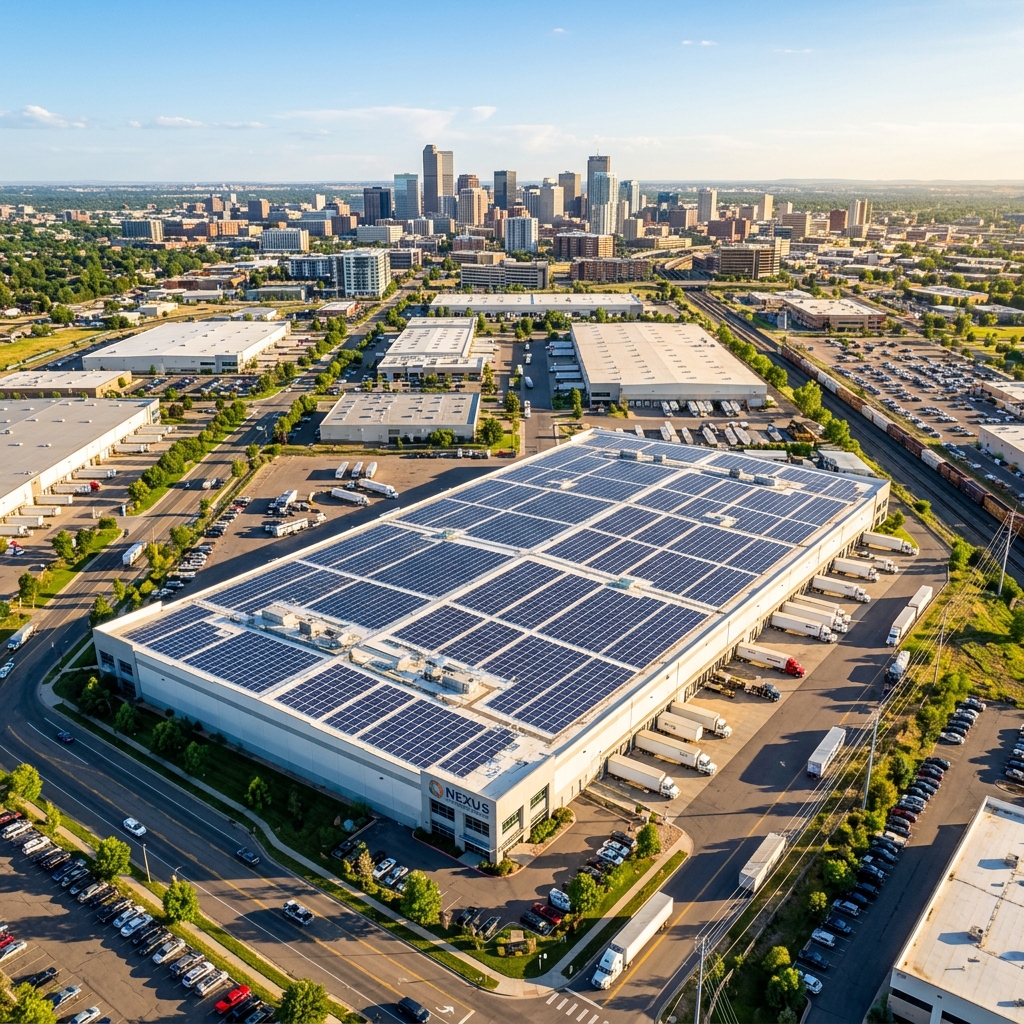
Rooftop Systems: Best for businesses with large, flat roofs such as warehouses, shopping centers, and office buildings. Utilizes otherwise unused space without impacting operations.
Ground-Mounted Arrays: Ideal for businesses with available land. Allows for larger installations and optimal panel orientation. Common for manufacturing facilities, farms, and data centers.
Carport Canopies: Solar panels mounted on canopy structures over parking lots. Provides dual benefit of energy generation and shade for vehicles. Popular with retail, hospitality, and healthcare facilities.
Building-Integrated Photovoltaics (BIPV): Solar technology integrated into building materials such as facades, windows, or roofing tiles. Offers aesthetic integration for businesses where appearance matters.
Case Study: A Typical Commercial Installation
Consider a medium-sized warehouse with a 50,000 sq ft flat roof:
| Parameter | Value | |---|---| | System Size | 200 kW | | Annual Production | 280,000 kWh | | Installation Cost | $300,000 | | Federal ITC (30%) | -$90,000 | | MACRS Depreciation | -$66,000 | | Net Cost After Incentives | $144,000 | | Annual Electricity Savings | $36,000 | | Simple Payback | 4 years | | 25-Year Net Savings | $756,000 |
Sustainability and ESG
Beyond the financial benefits, commercial solar supports increasingly important Environmental, Social, and Governance (ESG) objectives:
- Carbon Reduction: A 200 kW system prevents approximately 200 metric tons of CO2 emissions per year.
- Sustainability Reporting: Demonstrable renewable energy usage strengthens sustainability reports and corporate responsibility initiatives.
- Customer Expectations: 73% of consumers say they would change their consumption habits to reduce environmental impact. Solar-powered businesses resonate with these values.
- Talent Attraction: Employees, especially younger workers, increasingly prefer to work for companies committed to sustainability.
Financing Options for Businesses
Commercial solar financing has become highly flexible:
- Direct Purchase: Highest long-term returns; businesses capture all tax benefits and savings.
- Power Purchase Agreements (PPAs): Zero upfront cost; a third party owns and maintains the system, selling electricity to the business at a lower rate.
- Commercial Solar Loans: Specialized lenders offer competitive rates, often with terms structured so that monthly loan payments are less than the electricity savings.
- PACE Financing: Property Assessed Clean Energy programs allow businesses to finance solar through their property tax assessment.
Getting Started
At Solar Soul Energy, we specialize in helping businesses of all sizes transition to solar energy. Our process begins with a complimentary energy assessment, followed by a custom system design and a clear financial analysis.
Solar Soul Energy — Powering Business, Sustaining Growth.